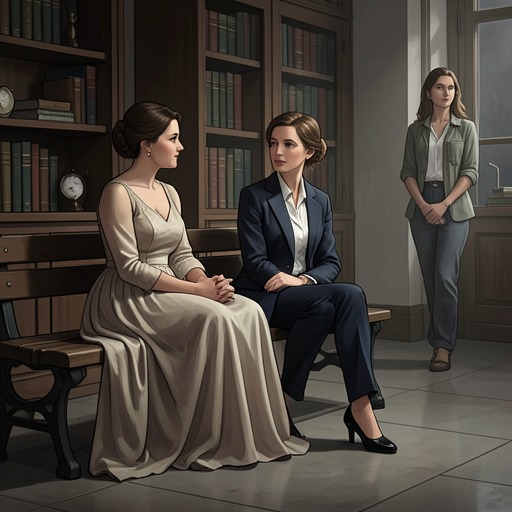
La Rana
My Tender MatadorLa Rana is the Queen of the Corner’s longtime friend, chosen family, and former protector. When the Queen’s involvement with Carlos and the Manuel Rodríguez Patriotic Front makes her home unsafe, La Rana offers both a place to turn and a relationship marked by affection, teasing, and hard-earned trust. Their final parting reveals the cost of the Queen’s departure: she can leave her possessions with La Rana, but not explain the danger that is taking her away.
Identity and Background
La Rana is one of the Queen’s trans friends, living with Lupe and Fabiola in an old house in Recoleta. The three women have known poverty and street life; La Rana and Fabiola have stepped back from hustling, though their home remains a gathering place for men living precariously. La Rana’s household is poor and plain, a contrast she wryly sets against the Queen’s more comfortable home and visitors.
Her friendship with the Queen predates the Queen’s move into the house on the corner. When the Queen was without a home and surviving on the street, La Rana gave her somewhere to stay and food to eat. She encouraged her to keep going, avoid alcohol and drugs, and recognize that she could still find companionship. The Queen remembers this care as the foundation of a friendship that has endured the years and its frequent joking reproaches.
Friendship and Conflict
La Rana’s teasing carries intimacy rather than rejection. She makes fun of the Queen for not visiting often, while the Queen accepts the banter because their relationship has accumulated deep affection. La Rana’s perspective also gives her the standing to challenge the Queen’s romantic hopes. When the Queen and Carlos part after a conversation about the Queen’s feelings and his revolutionary plans, the Queen angrily resists the suggestion that she is too vulnerable to understand the situation. She recognizes, however, that La Rana and Carlos may be right about her self-deception.
The tension is not simply between a romantic dream and a friend’s bluntness. La Rana knows the Queen’s history of precarious survival and sees that her devotion to Carlos has drawn her into danger. The Queen’s attachment leads her to help Carlos without expecting anything in return; La Rana’s concern is rooted in their shared past and in her understanding of what the Queen risks by remaining close to him.
The Queen’s Departure
After a night spent erasing evidence from her house and packing, the Queen arrives at La Rana’s door at dawn with her belongings. She asks La Rana to keep her things and gives her unfinished work to complete for extra money. She also leaves her radio, telling her to use whatever she needs. These practical gifts are a form of trust, but the Queen cannot give La Rana the explanation she asks for: she says only that she has to go because it is a matter of life and death.
La Rana tries to stop her and insists on knowing why she is leaving. A car horn interrupts them, and the Queen loosens La Rana’s hold, embraces and kisses her, and calls her affectionately Mama Rana. The farewell is brief because the danger allows no time for a fuller account. La Rana stands in the doorway waving as the Queen drives away, becoming smaller in the distance. The Queen leaves behind her home and possessions, but the embrace confirms that the friendship remains a source of belonging even as she is forced to depart.
Narrative Significance
La Rana’s care contrasts with the Queen’s unreturned love for Carlos: one relationship is sustained by years of mutual affection, while the other leaves the Queen exposed to disappointment and political danger. The Queen can offer Carlos a refuge and undertake risky errands for him, yet when she must flee, it is La Rana who receives her belongings and tries to hold her back. The parting therefore makes visible a quieter form of loyalty, built not on fantasy or revolutionary purpose but on shelter, food, work, teasing, and the trust to leave one’s possessions in another’s care.